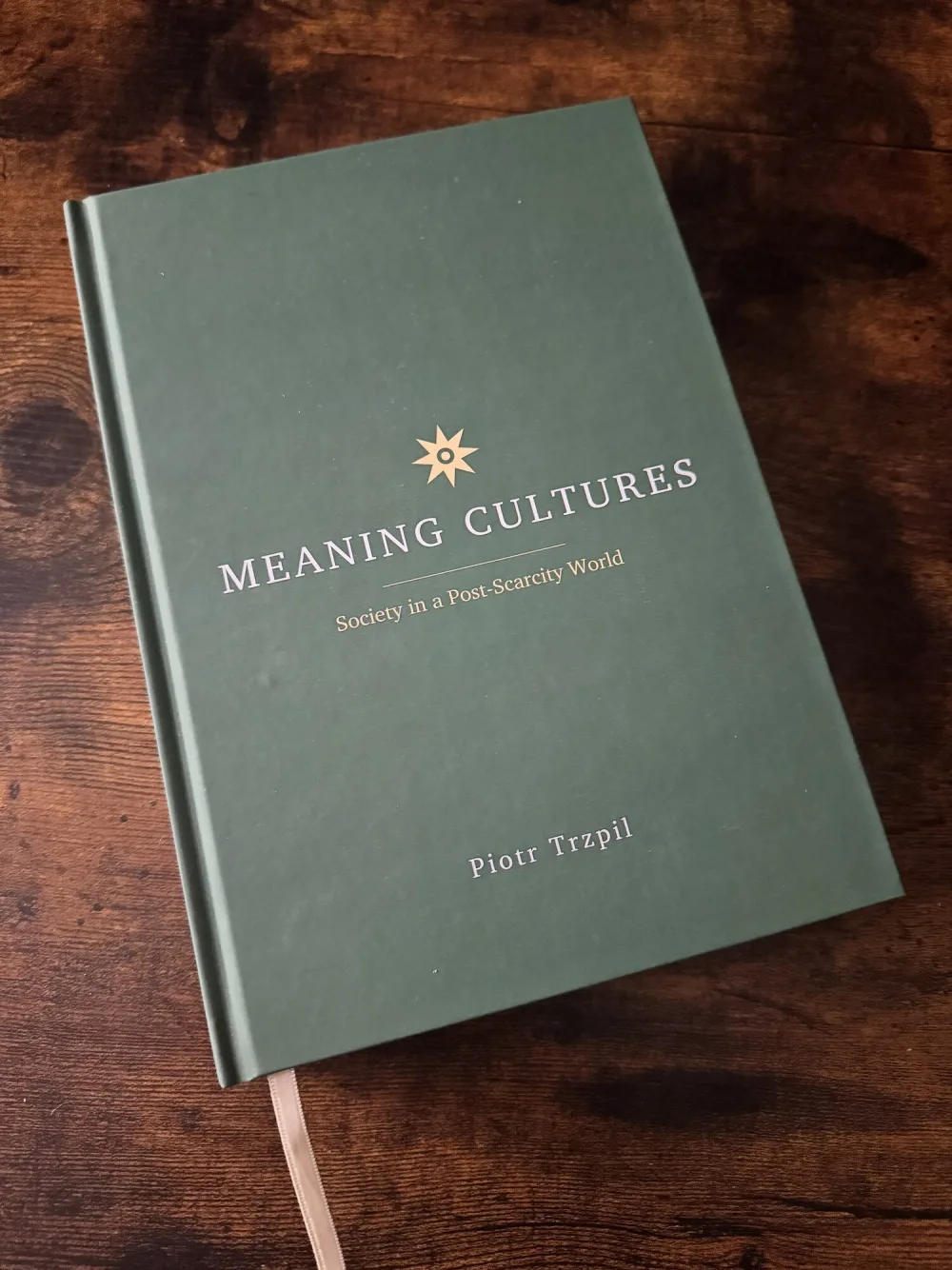
Society in a Post-Scarcity World
Developed societies have largely solved material scarcity, yet everyday life often feels weightless.
Culture is watched more than lived, free time drains into feeds and screens, and people still compete hard for standing on a narrow ladder of wealth and credentials. The book argues that modern institutions produce this, and that individuals are not to blame for it.
The argument
Reason was kept public while meaning was pushed into private taste, fantasy, and entertainment. People still need purpose, status, and stories that make effort count, and when mainstream life offers little of that, the vacuum fills with polarization, empty consumption, or retreat into fiction.
Instead of going back to older, more rigid societies, the book proposes designing new forms on purpose: communities people can belong to without being shut in, status earned by contribution more than display, crafts that keep high standards, and a calendar that gives a life shape.
- I
Conscious Re-enchantment
Reason and meaning working together again, as they did in building a temple. Shared meaning made deliberately and in public, without giving up science.
- II
Status & Story
Humans rank each other and live by stories. A culture can offer a lattice of many arenas where standing is earned by contribution, and lives worth telling.
- III
Culture on Purpose
Enclaves with real thresholds, guilds that hold a standard, and calendars that restore rhythm. Institutions that make participation, not spectatorship, the norm.
What's inside
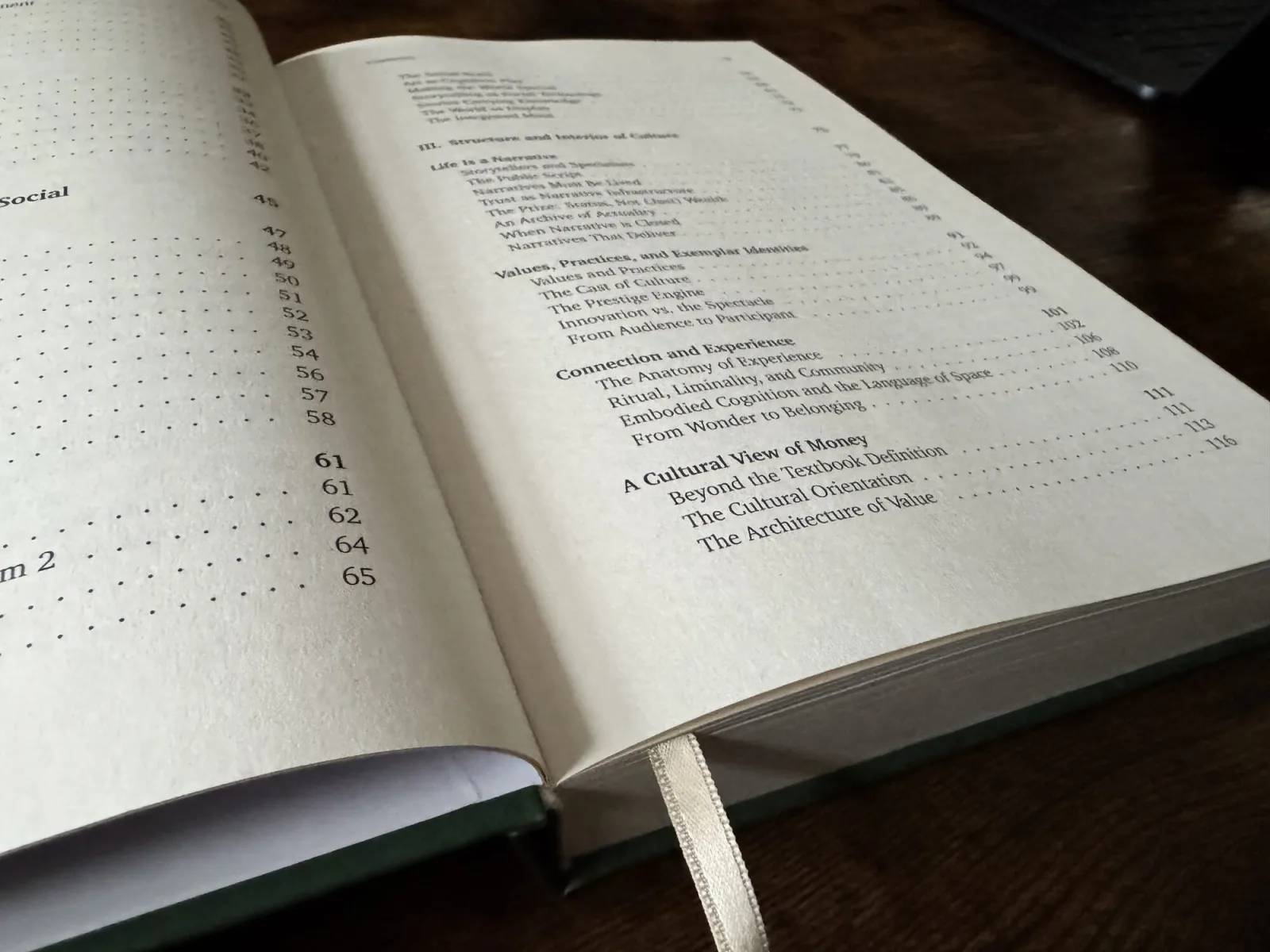
- Part I diagnoses post-scarcity anxiety, disenchantment, and the case for dual-frame integration and conscious re-enchantment.
- Part II maps foundations: status (dominance vs prestige), emotion as relational navigation, and the narrative mind.
- Part III takes culture apart: life narratives, values and exemplar identities, ritual, and money as cultural technology.
- Part IV builds the meaning economy: status and identity economics, enclusion and enclaves, modern guilds, and temporal institutions.
- Part V sketches multinarrative flow culture; the conclusion draws it together as Mythic Humanism.
- dual-frame mind
- conscious re-enchantment
- contributive status
- Ladder vs Lattice
- enclusion
- meaning economy
- Mythic Humanism
Who it's for
Builders of social worlds: institutional designers, community leaders, and systems thinkers who see mainstream economic and cultural models as exhausted, and who experience the crisis of meaning as personal but recognize it as a structural failure.